
Curly hair and summer heat have a complicated relationship. The same warmth and moisture in the air that other hair types tolerate reasonably well can turn a carefully defined curl pattern into a frizzy, shapeless cloud within an hour of stepping outside. For women navigating this every year, the real question is never which hairstyle looks best in a photo — it is which hairstyle survives humidity, sweat, sunscreen, and possibly a pool or ocean, without requiring a full reset by midday. This guide walks through ten practical, no-heat styling approaches that are built specifically for curl patterns in hot weather, along with the product habits and protective steps that make each style last.
None of the techniques below require a flat iron, a curling wand, or any tool that adds heat to already heat-stressed summer hair. That distinction matters more in the warmer months than any other time of year, because hair that is already dealing with UV exposure, chlorine, saltwater, and sweat has very little tolerance left for additional thermal styling before it starts showing real damage. Every style covered here relies on gathering, twisting, braiding, or product layering instead — techniques that protect the curl pattern rather than fighting against it.
Curly and coily hair strands have a naturally raised cuticle layer compared to straight hair, which makes them more porous and more prone to absorbing ambient moisture from the air. When humidity rises, that porous structure pulls in water vapor unevenly along the strand, causing the hair to swell and the cuticle to lift further. The visible result is frizz — not because the style was done incorrectly, but because the hair is doing exactly what porous hair does in a humid environment. This reaction is more pronounced the tighter the curl pattern, which is why looser 3a curls and tighter 4b or 4c coils often need different strategies even when the underlying humidity problem is the same.
Recognizing your curl type before choosing a summer style matters because some techniques that work beautifully on looser curls — a simple wash-and-go, for instance — can leave tighter coils looking undefined without the right product layering. Meanwhile, styles that rely on gathering and tension, like a pineapple or a puff, tend to work across nearly every curl type because they are less about defining individual curls and more about controlling the overall shape. Starting with an honest read of your own pattern saves a lot of trial and error once the temperature climbs.
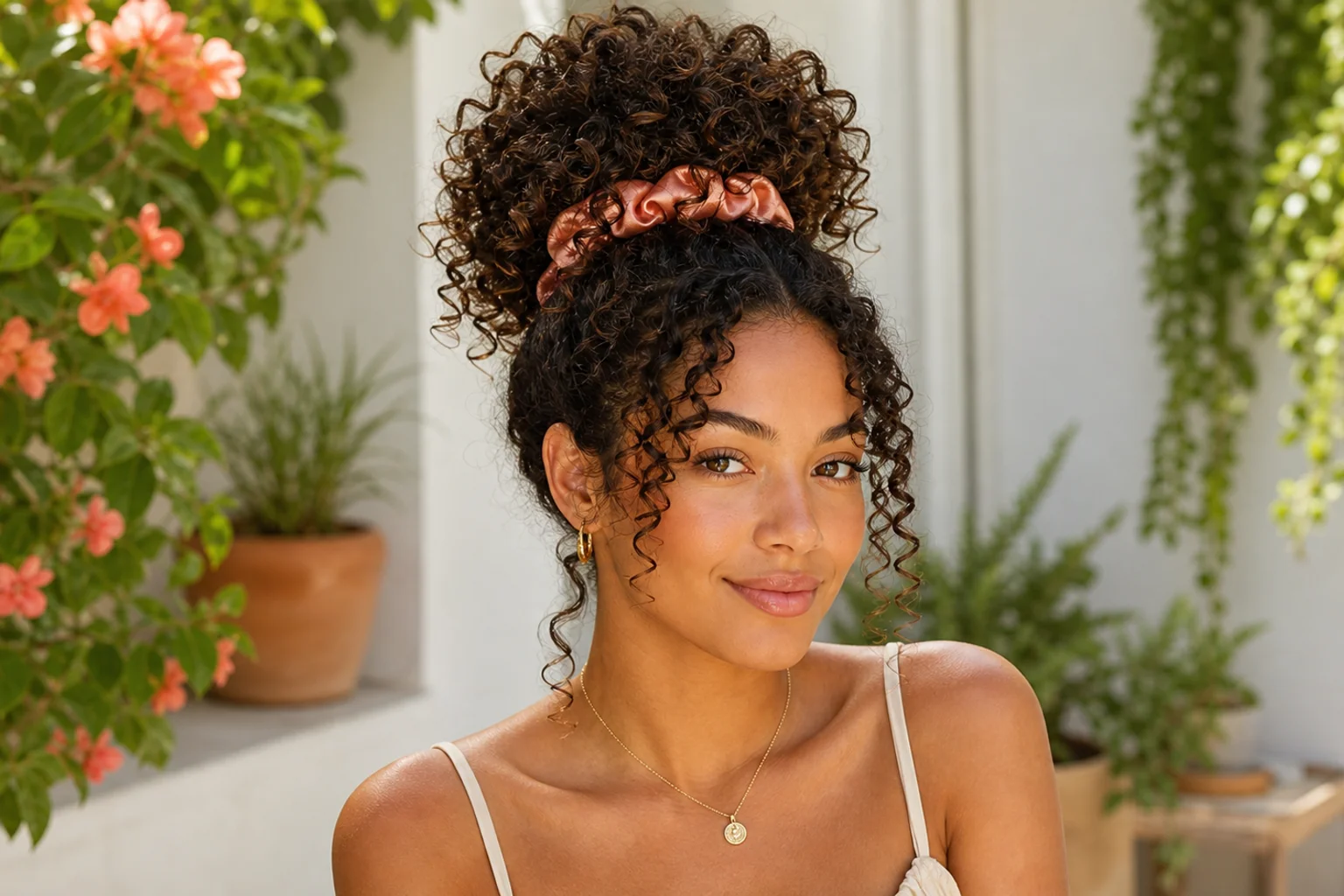
The pineapple — gathering curls loosely at the crown of the head with a satin scrunchie rather than a tight elastic — remains one of the most reliable summer techniques because it does two things at once: it gets hair off a sweaty neck, and it preserves curl definition by avoiding the compression that a low, tight style creates. The key detail most people miss is looseness. A pineapple pulled too tight at the root creates a hard part-line crease and pulls curls out of shape at the hairline, while a loosely gathered version lets the curls fall naturally around the face and simply lifts the bulk of the hair up and away from the body's heat.
The half-up puff is a close relative of the pineapple and works especially well for days that involve more movement — errands, travel, a full day outdoors — because securing only the top section leaves the lower curls free to move without unraveling the whole style. Both techniques take under two minutes, require no heat tools, and can be refreshed midday just by re-gathering loose sections rather than starting over.
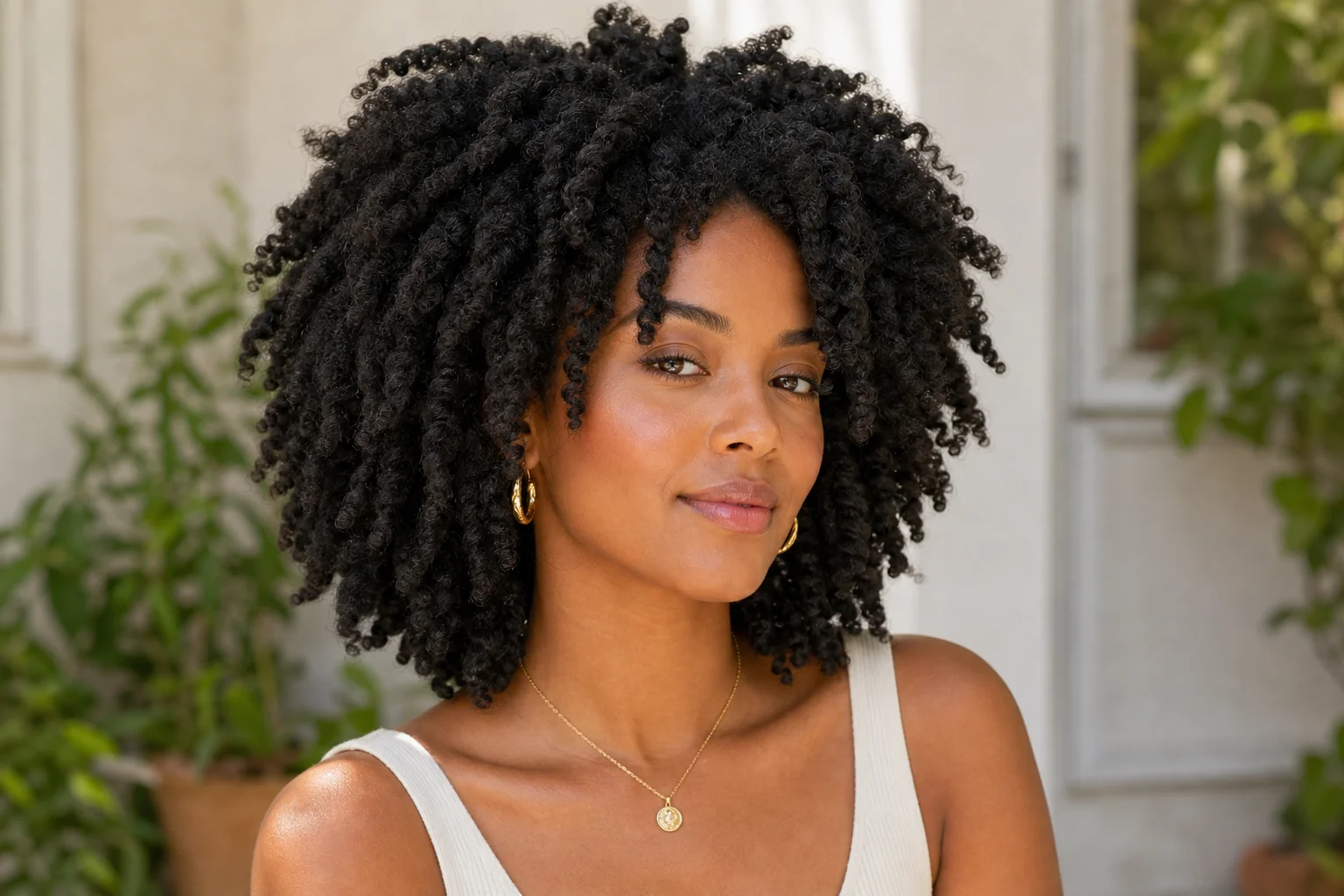
A wash-and-go, done with a curl-defining cream applied to soaking wet hair and left to air-dry or diffuse on low heat, gives the most natural curl shape with the least manipulation — which also makes it one of the most humidity-resistant options when it is layered correctly. The order matters: leave-in conditioner first to lock in moisture, then a lightweight gel or cream applied section by section while the hair is still dripping wet, scrunched upward rather than smoothed downward. Skipping the wet-application step is the most common reason a wash-and-go frizzes early — product applied to already-drying hair simply cannot coat the strand evenly.
Twist-outs offer more defined, elongated curls and tend to last longer through humid conditions because the twisting process itself adds a layer of tension and structure that a wash-and-go does not have. Small sections are twisted while damp with product, left to dry completely — ideally overnight — and then gently separated by hand once fully dry. The result holds shape through a full day of heat far better than a same-day wash-and-go, which is why twist-outs are a popular choice for anyone with an all-day outdoor commitment.
For the complete visual walkthrough of these techniques and nine more summer-ready looks, see the full guide on Hairelle Fashion.
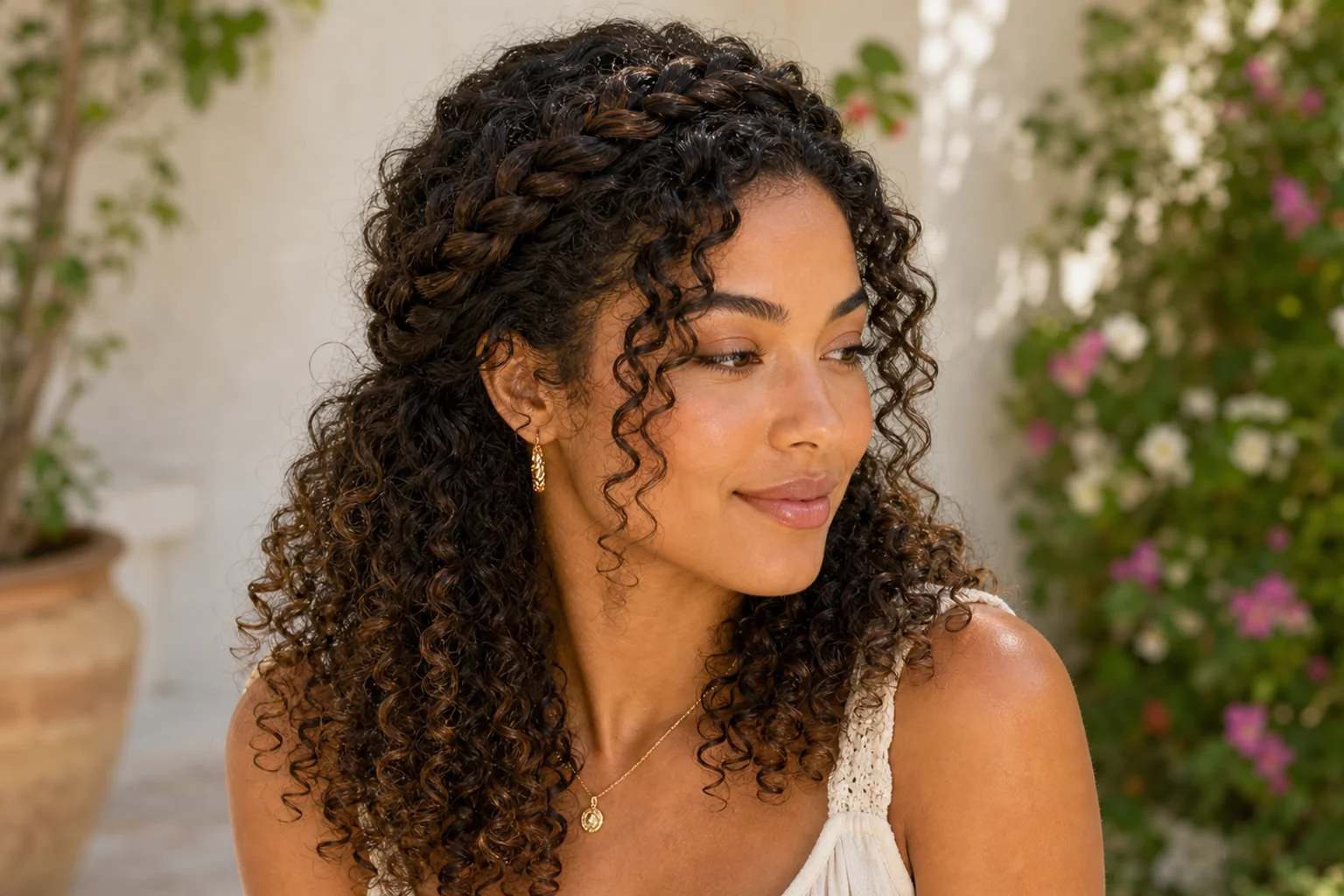
For days that involve real exposure — a beach trip, hours by the pool, an outdoor event with no shade — a braided crown or a low twisted bun offers more security than a pineapple because the hair is fully contained rather than loosely gathered. A braided crown, worked from each side toward the back and pinned flat, keeps curls off the face and neck entirely while still looking finished enough for daytime plans that extend into the evening. It also holds up remarkably well against wind and water, which makes it a natural choice for anything near open water.
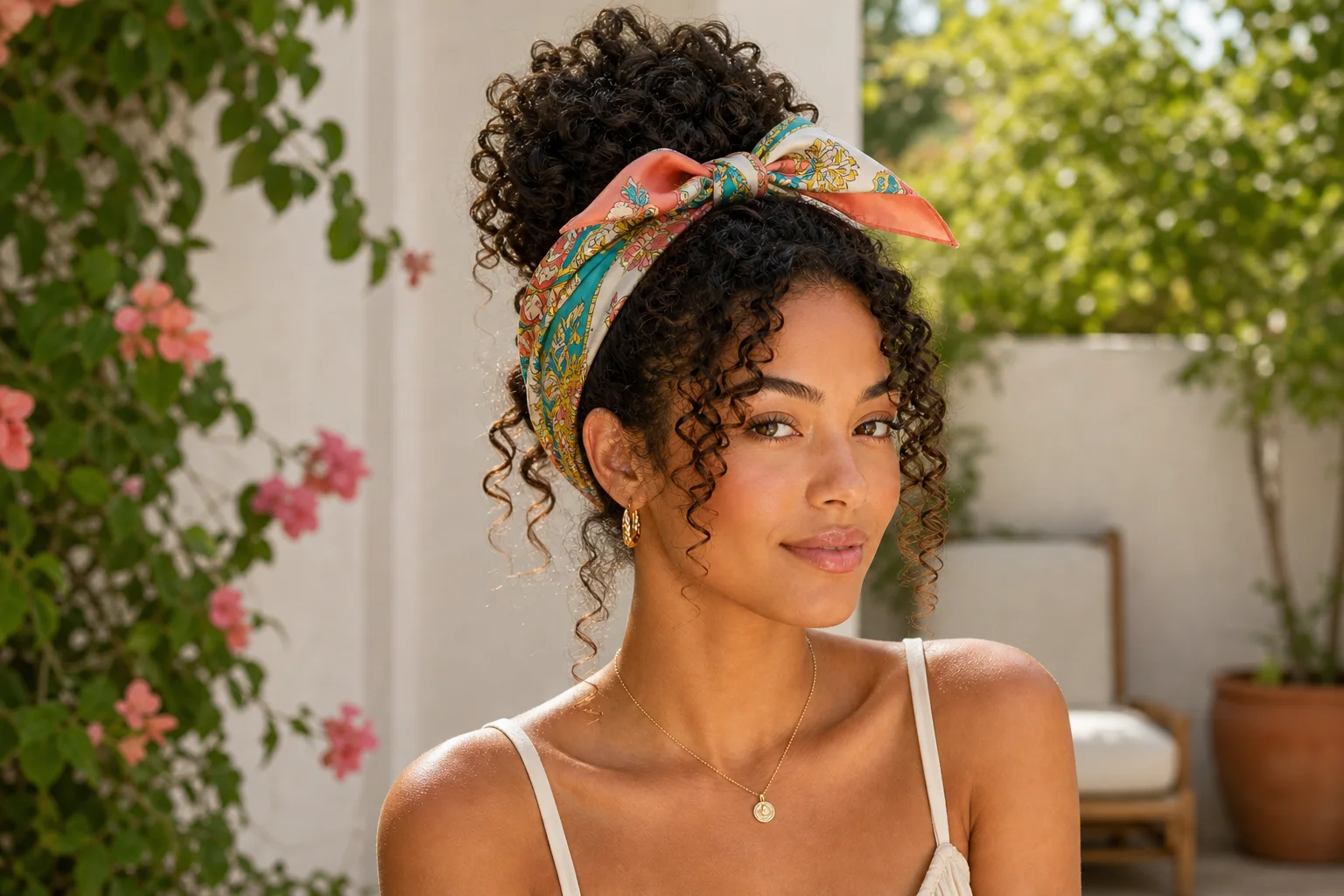
Box braids or a scarf-wrapped low bun serve a similar protective purpose for longer stretches — a week at the coast, a multi-day festival — where daily restyling is neither practical nor good for the hair. Wrapping a low bun in a lightweight scarf after a swim also doubles as protection against chlorine and salt residue drying out exposed strands before you get a chance to rinse properly.
Pool and ocean water do real damage to curl pattern if hair goes in dry, because dry, porous curls absorb chlorinated or salt water rapidly and hold onto the minerals and salt after the fact, leaving strands rough and prone to breakage. Wetting hair thoroughly with clean fresh water before swimming, and ideally coating it with a leave-in conditioner or a small amount of oil first, creates a barrier that reduces how much pool or ocean water the hair actually absorbs. Rinsing again immediately after swimming, even without a full wash, removes most of the residue before it has time to settle into the cuticle.
UV exposure has a similar cumulative effect on curl pattern, gradually drying out strands and fading color-treated hair faster than it would fade indoors. A leave-in spray with UV filters, reapplied through the day, is a low-effort habit that protects both the moisture balance and the color vibrancy of curly hair through long stretches of sun exposure. Combined with a wide-brimmed hat or scarf on the highest-exposure days, this is usually enough to prevent the dryness that turns into breakage by the end of the season.
See how these same protective principles are applied across a full seasonal styling library — explore here.
The styles above only hold their shape if the nighttime routine supports them. Sleeping on a satin or silk pillowcase, rather than cotton, significantly reduces the friction that causes frizz and flattening overnight, and it is one of the lowest-effort changes with the most consistent payoff. For anyone who prefers more coverage, a loose satin bonnet does the same job while also protecting a pineapple or twist-out from getting crushed against the pillow.
Refreshing a style on day two or three, rather than washing and restyling from scratch, is what makes a summer routine sustainable. A light mist of water mixed with a small amount of leave-in conditioner, applied with fingers or a wide-tooth comb only where curls have loosened or frizzed, revives shape without over-manipulating the hair. Reserving a full wash and deep conditioning treatment for once or twice a week — rather than daily — also gives curls time to hold their moisture balance, which in practice is what determines whether a style survives a full humid day or collapses by noon.
More seasonal curl routines and styling breakdowns are available here — continue reading.